Every parent wants to see their child perform well in school. Good marks often bring happiness, confidence, and a sense of achievement. However, an important question remains:
Do high scores always mean strong learning?
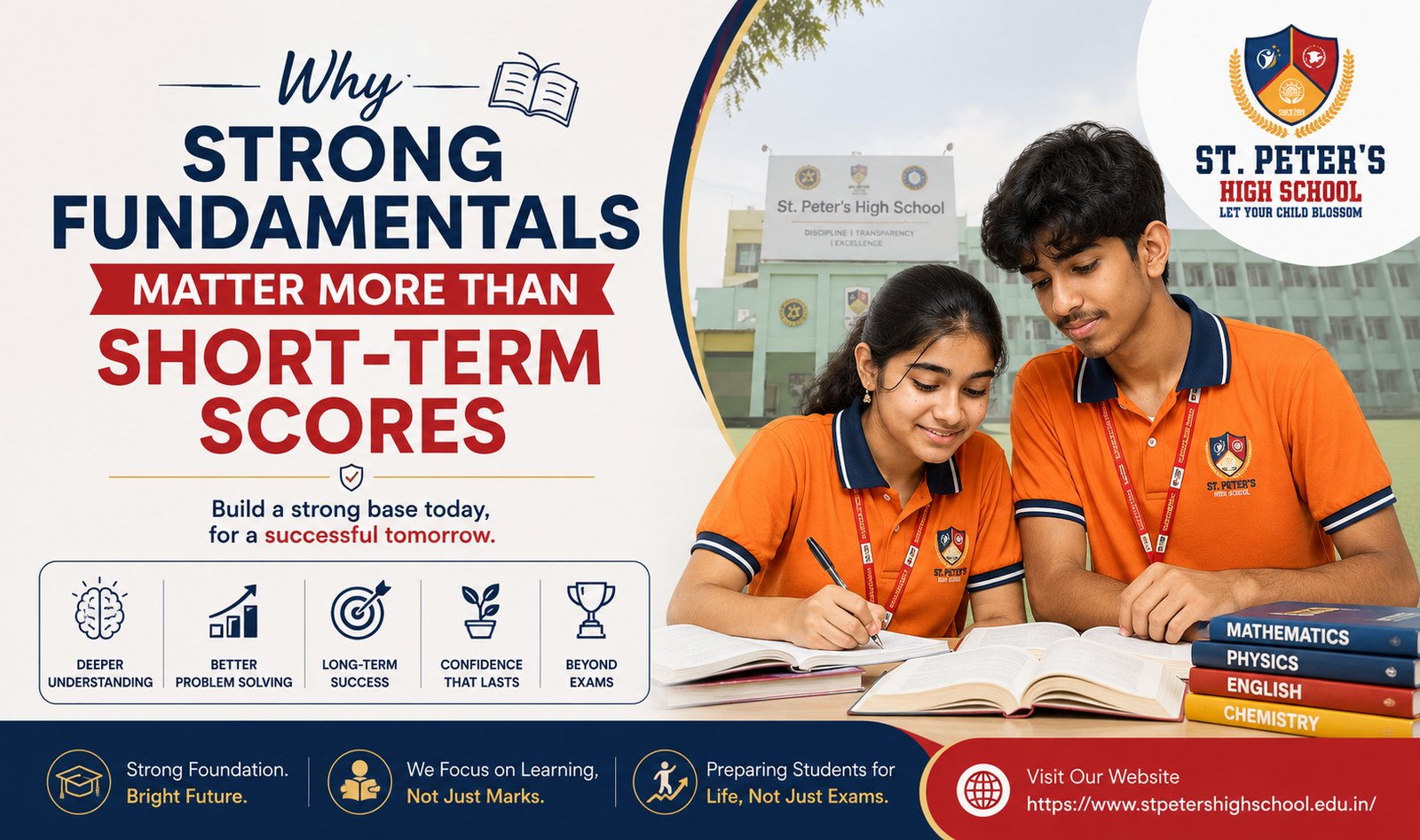
Not always. Many students achieve excellent marks in examinations through memorization and short-term preparation. While this may help them perform well in a specific test, it does not always prepare them for future academic challenges or real-life situations.
This is why early childhood education plays a critical role in shaping a child's future. Strong fundamentals help students learn with confidence, solve problems independently, and adapt to changing situations throughout their lives.
In this blog, we explore why building strong fundamentals is more important than chasing short-term scores and how parents can support their children's long-term growth.
Understanding the Difference Between Scores and Learning
Scores are often used to measure academic performance. They provide useful information about how a student performed in a particular test. However, scores alone do not tell the complete story. A child may score high marks by memorizing answers without truly understanding the concepts behind them. Another child may score slightly lower but have a deeper understanding of the subject.
Over time, the second child often performs better because learning built on understanding lasts much longer.
Strong learning focuses on:
-
Understanding concepts
-
Critical thinking
-
Problem-solving abilities
-
Creativity
-
Communication skills
-
Confidence in learning
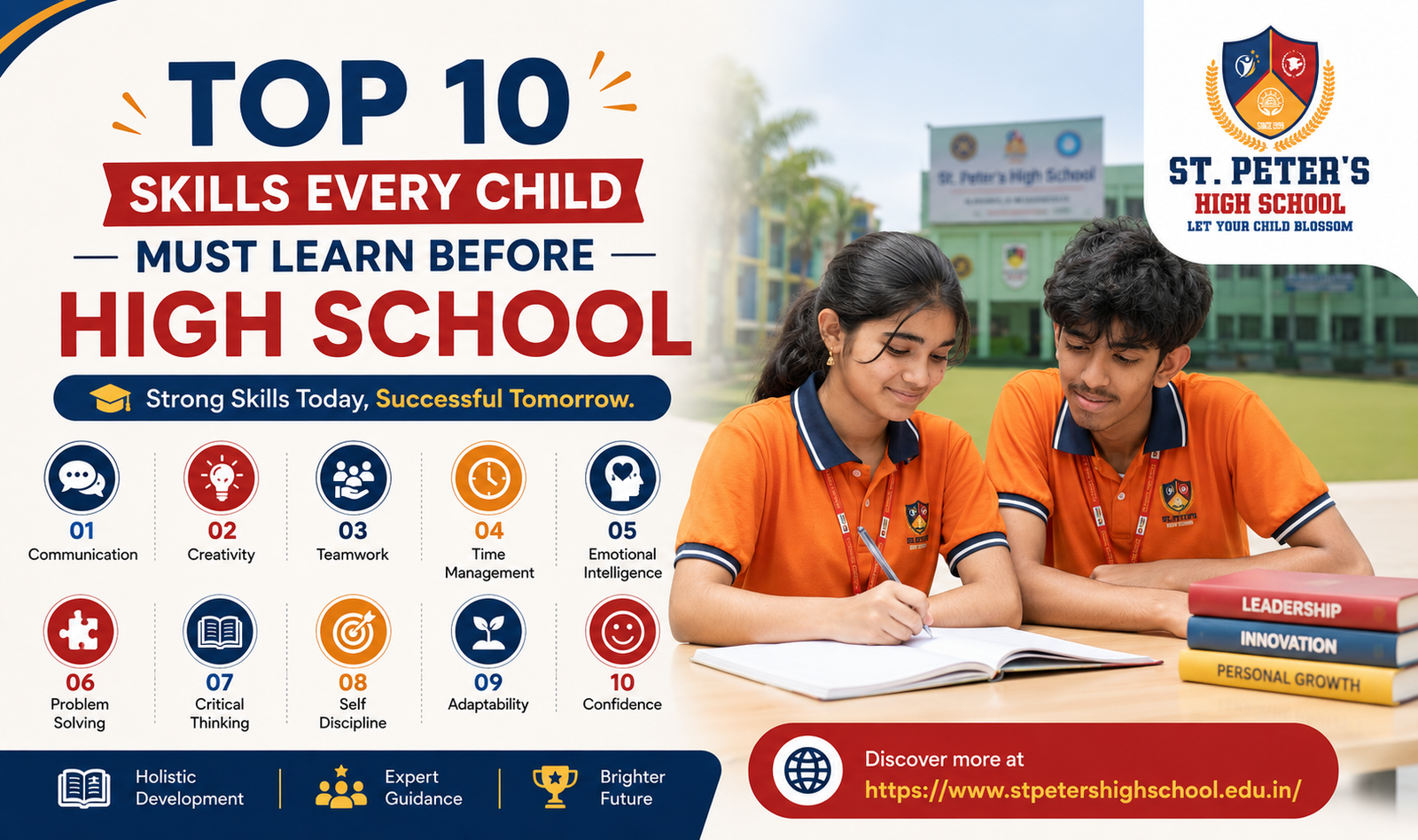
These skills form the foundation of lifelong success.
Why Early Childhood Education Builds the Strongest Foundation
The early years of a child's life are among the most important stages of development. Research consistently shows that the brain develops rapidly during childhood. During this period, children build the basic skills they will use throughout their academic journey.
Effective early childhood education helps children develop:
-
Language skills
-
Social skills
-
Emotional intelligence
-
Cognitive abilities
-
Curiosity and creativity
-
Learning confidence
When children receive quality learning experiences at a young age, they develop a strong foundation that supports future academic growth.
At St. Peter's High School, we focus on nurturing curiosity, encouraging exploration, and helping every child build confidence through meaningful learning experiences.
Strong Fundamentals Create Long-Term Academic Success
Students who understand basic concepts find it easier to learn advanced topics later.
For example:
A child who understands basic mathematics concepts such as numbers, patterns, and logical thinking will find algebra and higher mathematics easier in later grades. Similarly, children with strong reading skills can understand complex subjects more effectively as they grow older.
Strong fundamentals help students:
-
Learn faster
-
Retain information longer
-
Connect ideas across subjects
-
Build confidence
-
Reduce academic stress
This is why educational experts emphasize conceptual learning rather than rote memorization.
The Problem with Focusing Only on Short-Term Scores
Many students face pressure to achieve high marks in every examination. While academic achievement is important, excessive focus on scores can create several challenges.
Increased Stress: Children may become anxious about examinations and fear making mistakes.
Reduced Curiosity: Students may focus only on what will appear in tests rather than exploring new ideas.
Memorization Instead of Understanding:
Learning becomes temporary when students memorize information solely for examinations.
Lower Problem-Solving Ability: Students may struggle when faced with unfamiliar situations that require critical thinking.
Lack of Confidence: When scores become the only measure of success, children may lose confidence if they do not perform well in a particular test. Education should help children grow, not create unnecessary pressure.
Why Concept-Based Learning Matters
Concept-based learning encourages students to understand the "why" behind every topic. Instead of simply memorizing facts, students learn how ideas connect and apply to real-life situations.
Benefits of concept-based learning include:
-
Better understanding
-
Stronger memory retention
-
Improved analytical thinking
-
Enhanced creativity
-
Greater confidence
At St. Peter's High School, our teaching approach encourages students to ask questions, explore solutions, and develop a deeper understanding of subjects.
This creates learners who are prepared not only for examinations but also for future opportunities.
Building Confidence Through Strong Foundations
Confidence is one of the most valuable qualities a child can develop. Children gain confidence when they truly understand what they are learning. When students have strong fundamentals:
-
They participate actively in class.
-
They ask meaningful questions.
-
They solve problems independently.
-
They approach challenges positively.
-
They become more resilient.
Confidence developed through understanding lasts much longer than confidence built solely on examination results.
How Strong Fundamentals Support Future Careers
The world is changing rapidly. Future careers will require skills such as:
-
Critical thinking
-
Communication
-
Creativity
-
Collaboration
-
Adaptability
-
Digital literacy
These skills cannot be developed through memorization alone. Strong educational foundations help children adapt to new technologies, solve complex problems, and continue learning throughout their lives. Employers increasingly value individuals who can think independently and apply knowledge effectively. This makes strong fundamentals more important than ever.
The Role of Parents in Building Strong Foundations
Parents play a crucial role in supporting their child's learning journey. Here are some practical ways parents can help:
Encourage Questions: Allow children to ask questions and explore answers.
Focus on Learning, Not Just Marks: Praise effort, improvement, and understanding.
Create a Reading Habit: Reading improves vocabulary, comprehension, and imagination.
Support Independent Thinking: Encourage children to solve problems on their own before offering solutions.
Celebrate Progress: Recognize small achievements and continuous growth.
When parents focus on learning rather than only results, children develop healthier attitudes toward education.
How St. Peter's High School Nurtures Strong Fundamentals
Founded in 1999, St. Peter's High School was established with a vision of nurturing every child's unique potential. Our motto, "Let Your Child Blossom," reflects our commitment to helping students grow academically, emotionally, socially, and personally.
At St. Peter's High School, we focus on:
Strong Academic Foundation
We build conceptual understanding from the earliest stages of learning.
Holistic Development
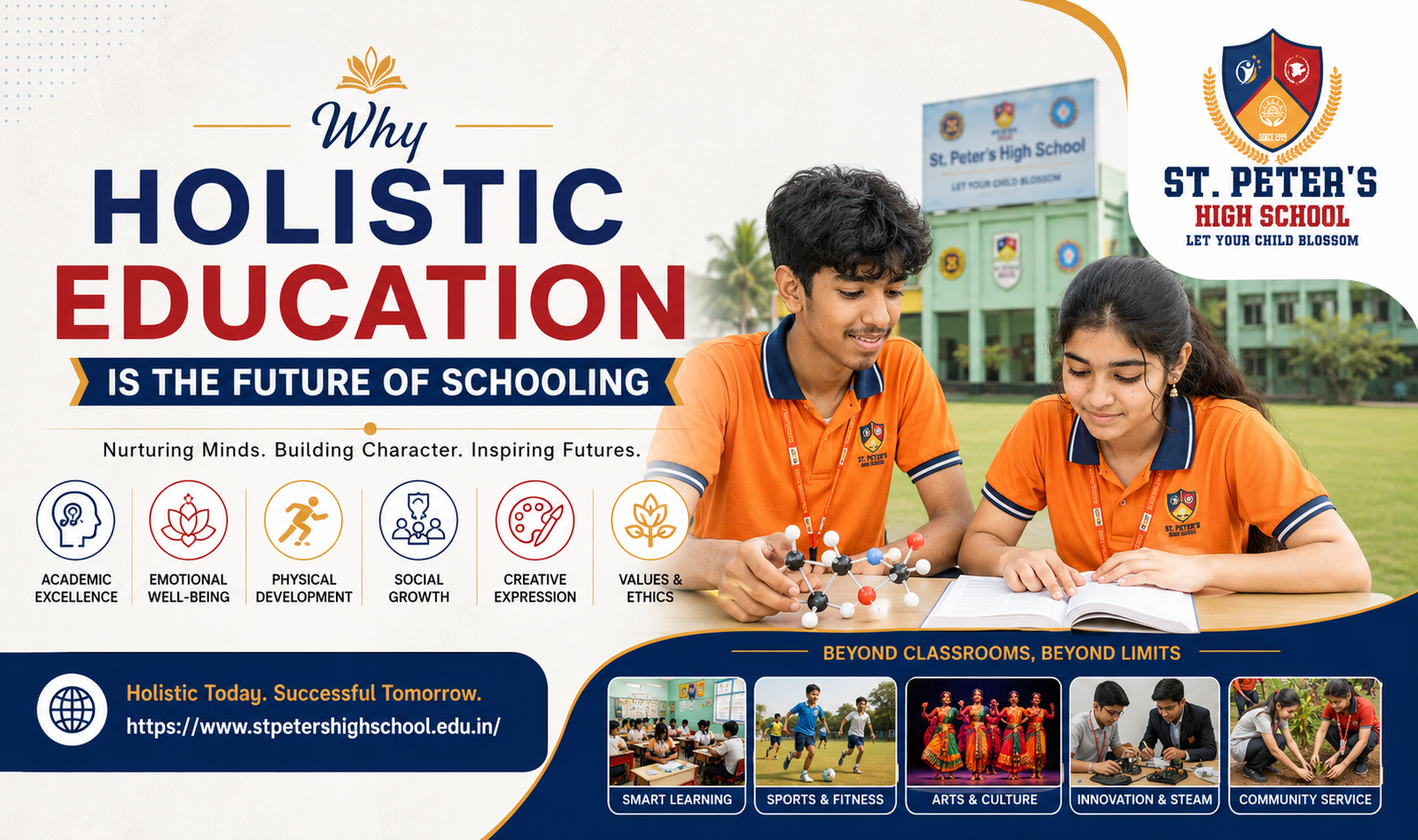
Students participate in academics, sports, arts, leadership activities, and technology-based learning.
Individual Attention
Every child learns differently. Our teachers support each student's unique learning journey.
Future-Ready Skills
We encourage communication, collaboration, creativity, and critical thinking.
Values and Character Development
Education is not only about knowledge. It is also about developing integrity, responsibility, and compassion.
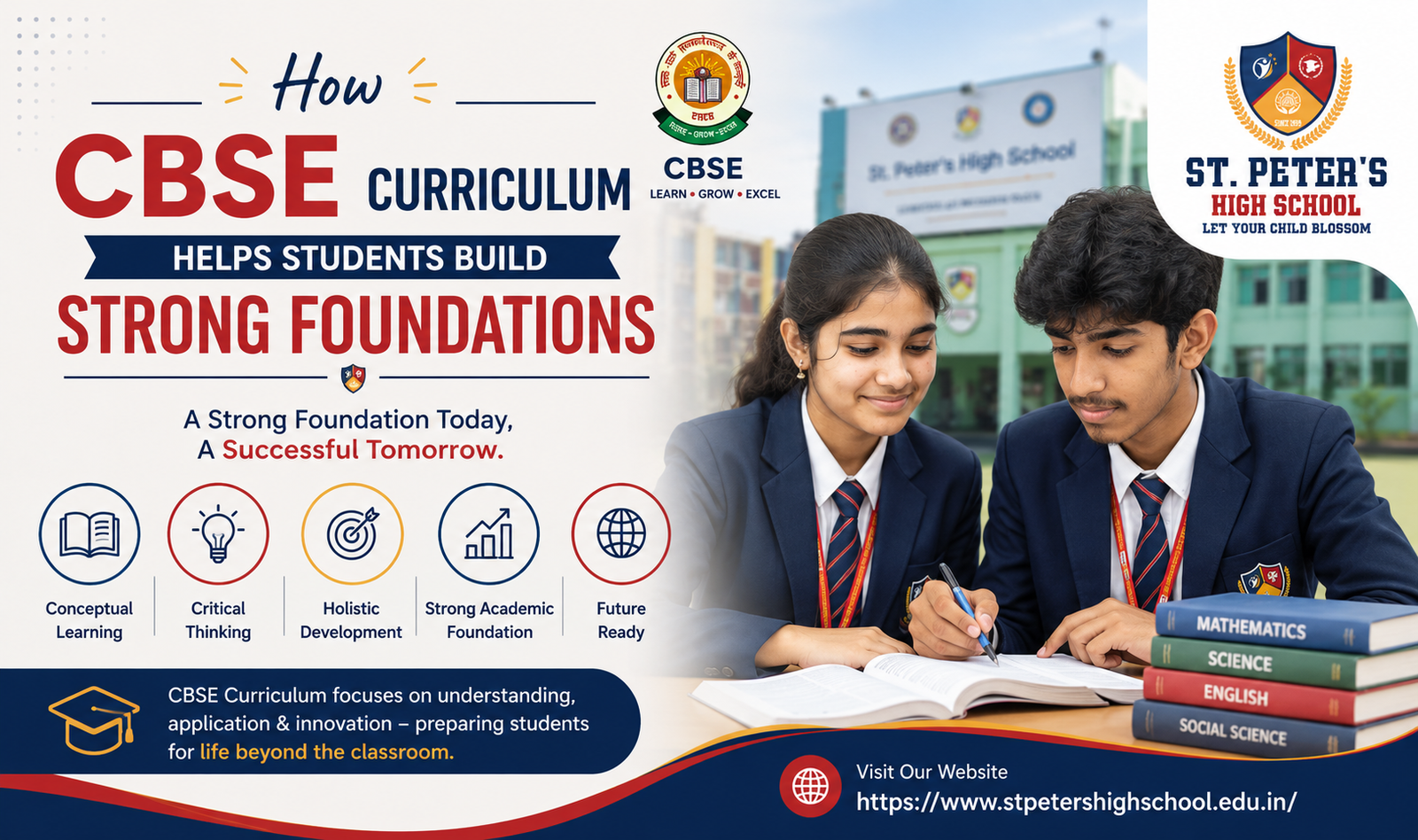
Parents looking for a CBSE school that focuses on both academic excellence and long-term growth can find the right learning environment at St. Peter's High School.
Conclusion
Short-term scores may bring temporary satisfaction, but strong fundamentals create lifelong success. Children who develop deep understanding, confidence, curiosity, and problem-solving abilities are better prepared for future academic challenges and life opportunities. Quality early childhood education plays a critical role in building these foundations. When schools and parents work together to focus on learning rather than only marks, children grow into capable, confident, and successful individuals.
At St. Peter's High School, Bowenpally, we remain committed to nurturing young minds through strong academic foundations, holistic development, and a supportive learning environment where every child can truly blossom. Because when children build strong fundamentals today, they create a brighter future tomorrow.
Frequently Asked Questions (FAQs)
1. Why are strong fundamentals more important than high scores?
Strong fundamentals help children understand concepts deeply, solve problems independently, and succeed in future studies. High scores alone may not always reflect true understanding.
2. How does early childhood education support long-term success?
Early childhood education develops cognitive, social, emotional, and communication skills that form the foundation for future academic achievement and personal growth.
3. Can students achieve good scores while focusing on conceptual learning?
Yes. Students who understand concepts thoroughly often perform better in examinations because they can apply their knowledge confidently and accurately.
4. How can parents help children build strong learning foundations?
Parents can encourage reading, support curiosity, focus on understanding rather than marks, celebrate effort, and create a positive learning environment at home.
5. How does St. Peter's High School help students develop strong fundamentals?
St. Peter's High School emphasizes conceptual learning, individual attention, holistic development, future-ready skills, and character building to help students achieve long-term success.